The project
From the brief to what shipped.
A web0 client project. I worked with Mindtrip’s own team, and what is not listed as mine is theirs.
The situation
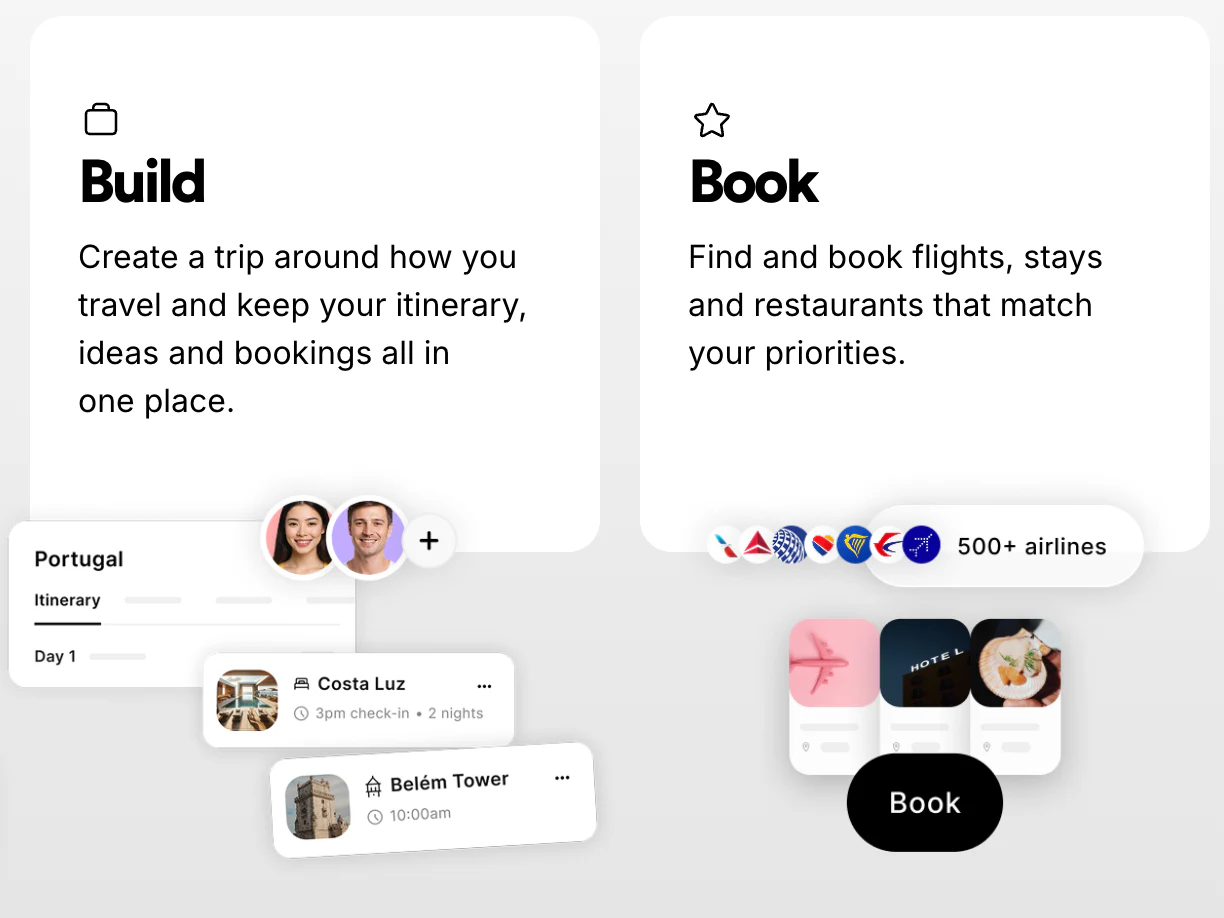
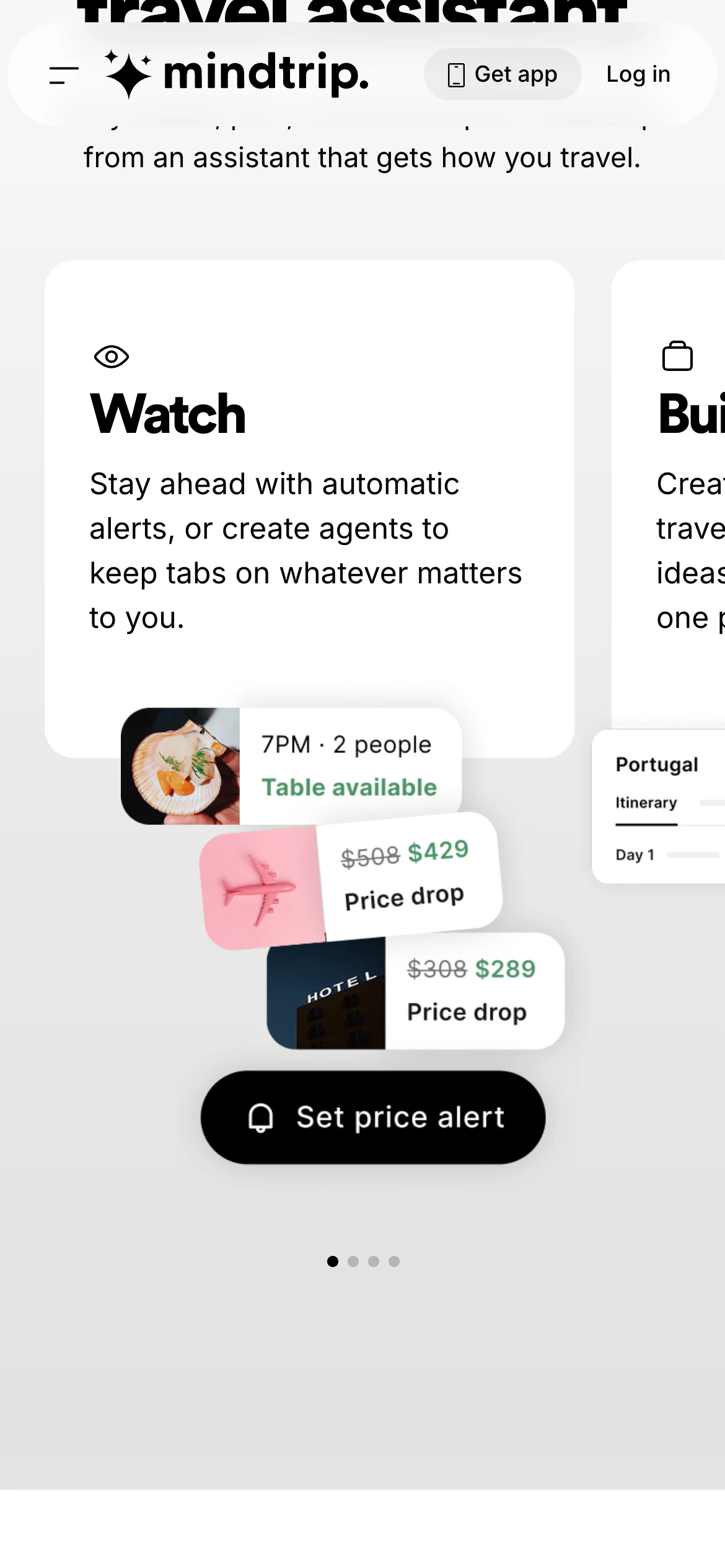
Mindtrip is a travel assistant: tell it how you like to travel and it plans the trip, finds the places and keeps an eye on prices. It sells to travellers, and to businesses that want it on their own sites.
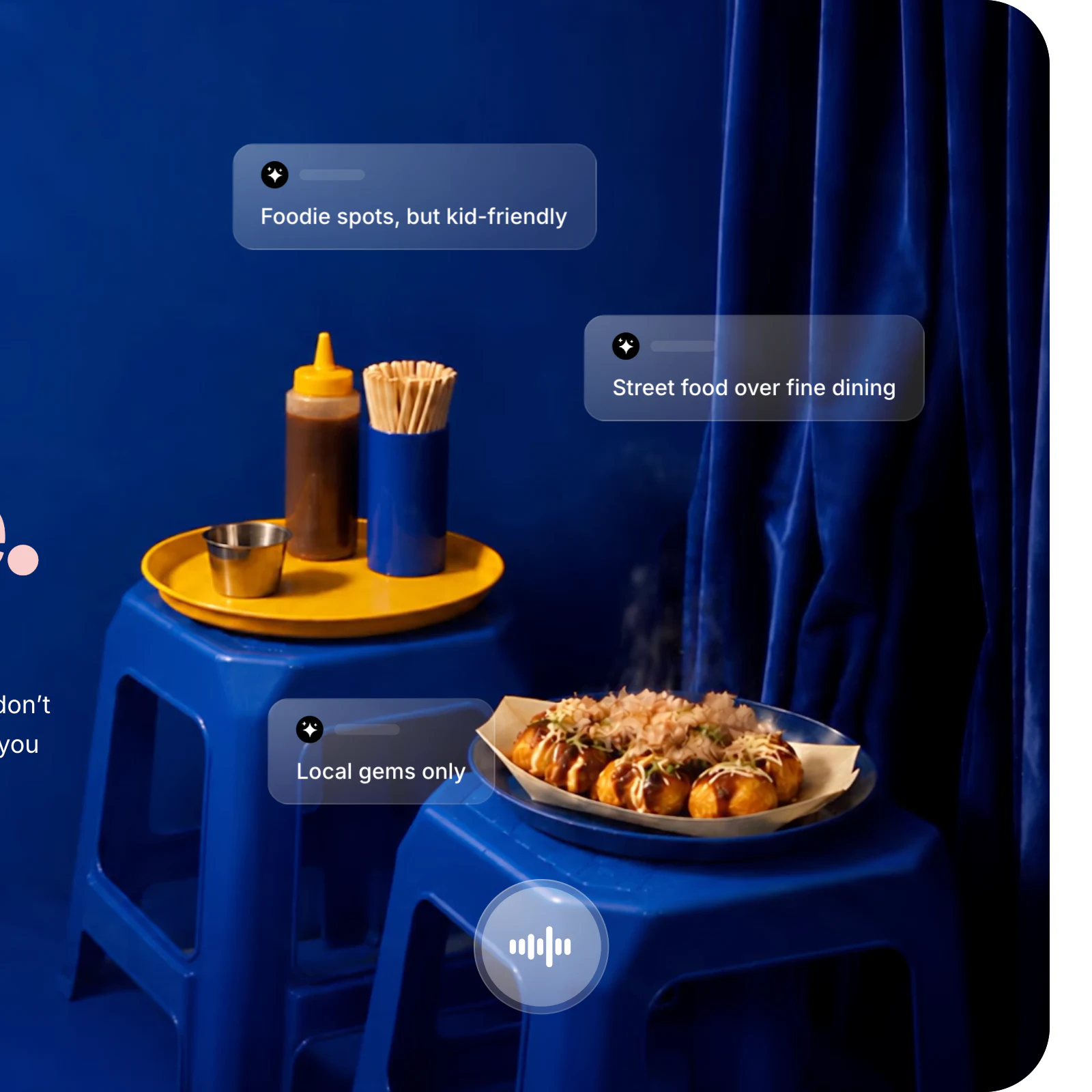
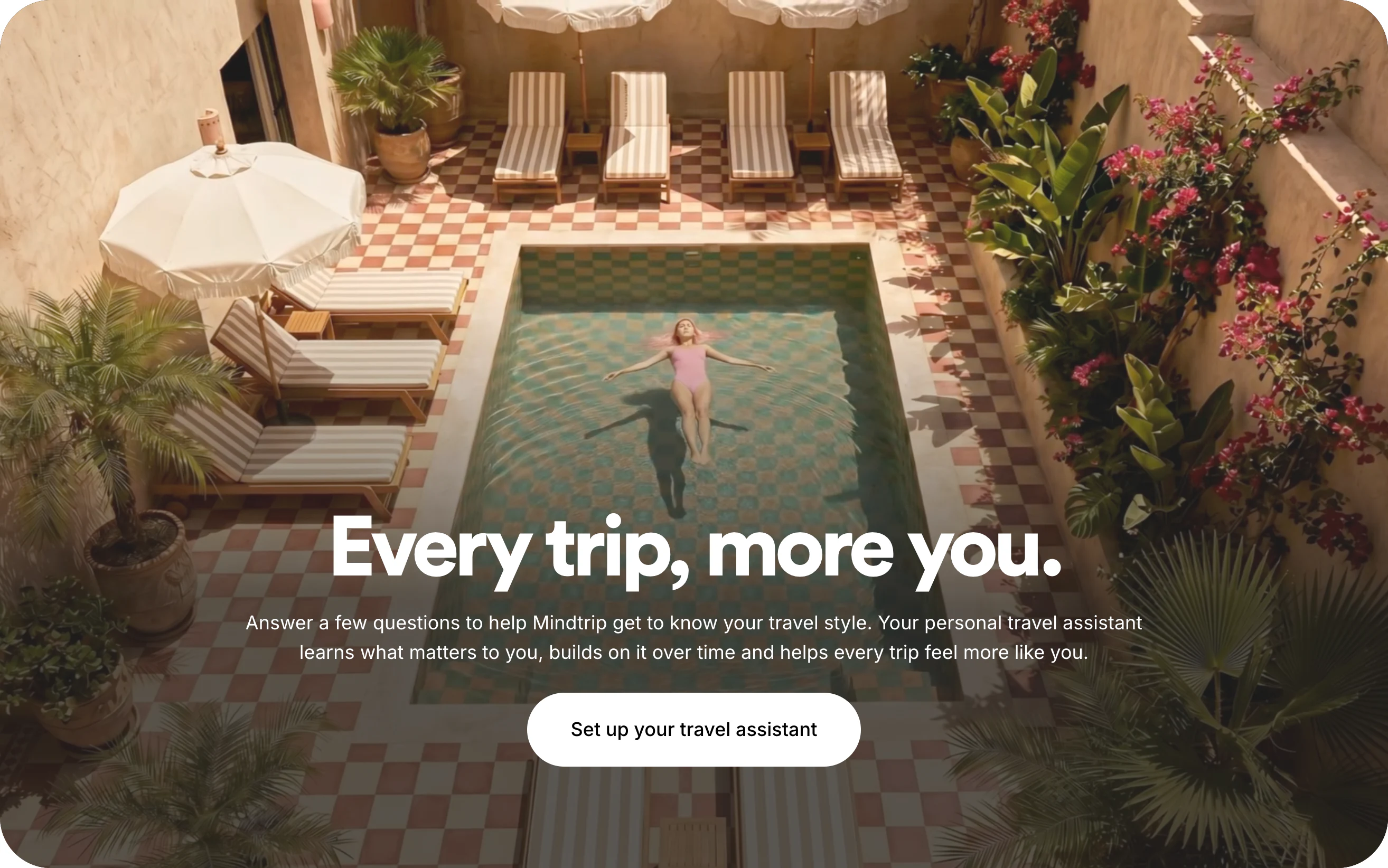
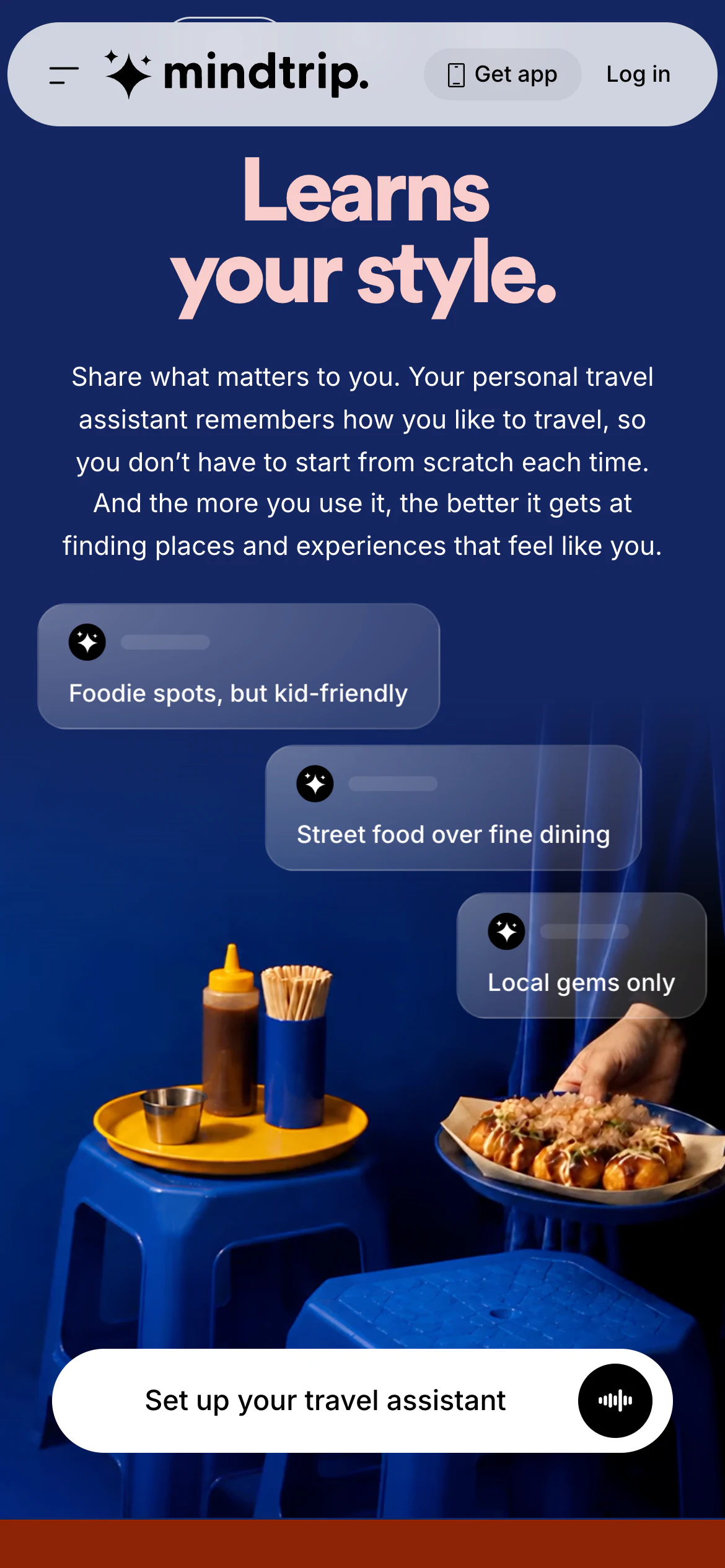
An AI travel app is easy to describe and hard to make feel personal. The site had to show the assistant learning your taste, not list features, and it had to look as good as the places it sends you.
What I did
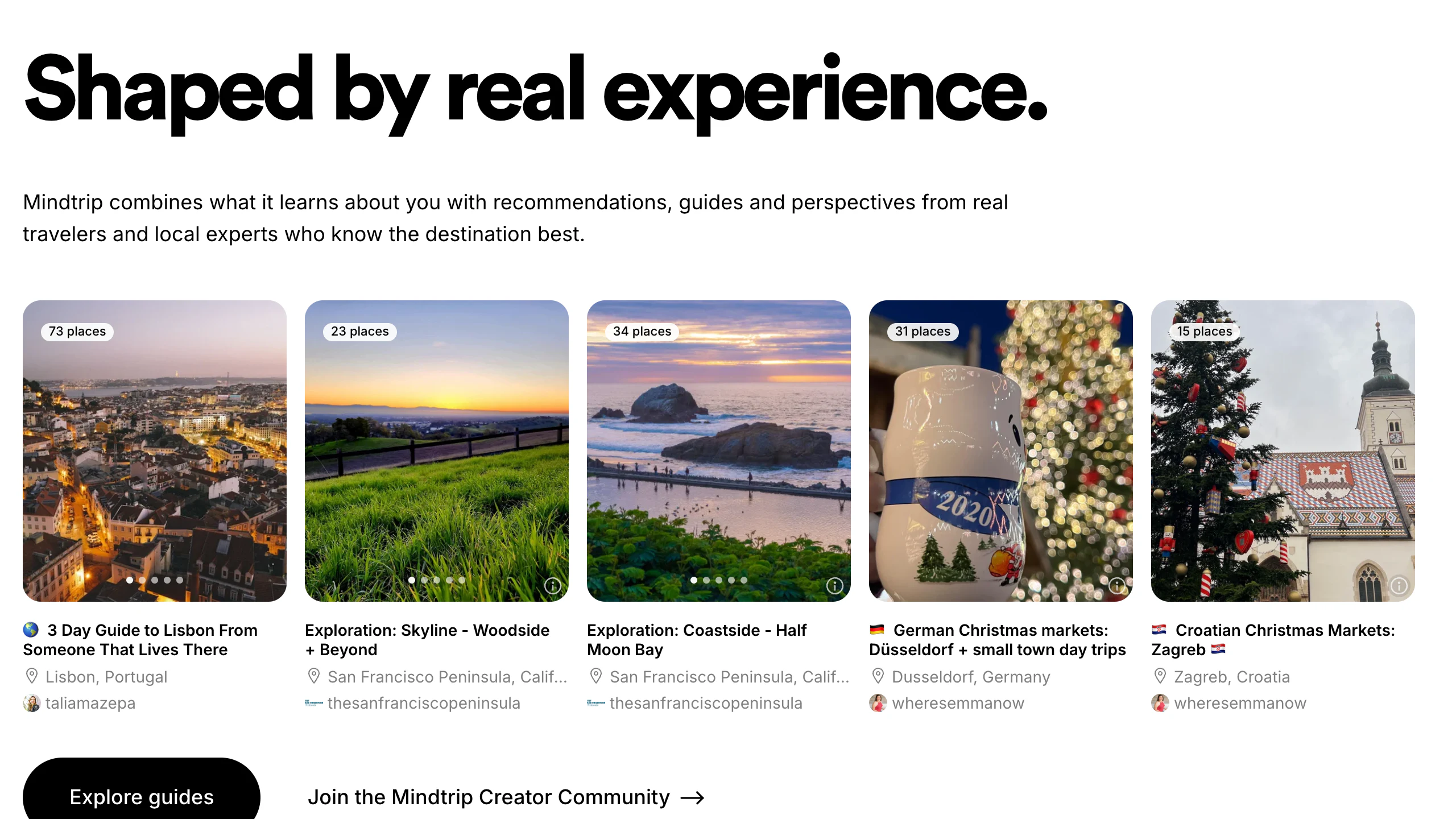
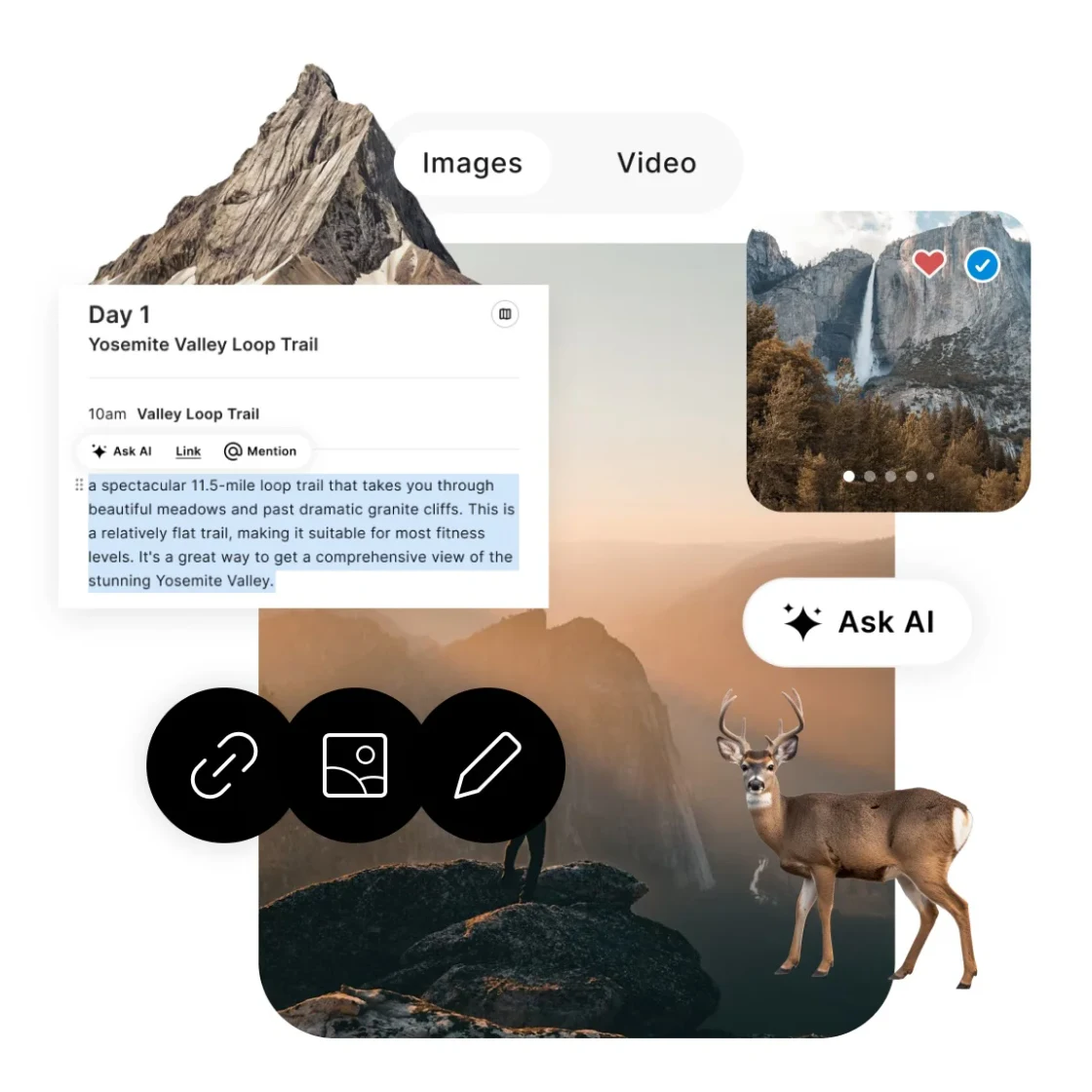
I designed and built the site on my own, and moved with Mindtrip when priorities changed. Every section shows the assistant doing one thing for you, and the photography carries the page so the brand finally looks like the trips.
What shipped
- The site, designed and built by one person.
- One section for each thing the assistant does for you.
- Photography that carries the page.
- Delivered on time, in the founder’s words.
Impact
What it’s worth.
The figure, what it counts, and the arithmetic with every input, one click away.
Mindtrip: the impact
About 95
more sign-ups for every 10,000 visitors
Sign-ups are free, so this counts people, not revenue.
- Inputs
- 2
How it adds up
The formula10,000 visitors × the share who sign up × the lift from the redesign
| Input | Value | Where it comes from |
|---|---|---|
| Visitors who sign up | 3.8% | My figureThe median Unbounce reports for SaaS landing pages, applied here to a consumer product site.Unbounce, SaaS landing pages, 2024 (opens in a new tab) |
| Lift from the redesign | +25% | My figureFor scale: speed-only tests show 8% to 10%. Baymard puts the potential from better checkout design at 35% for large shops. NN/g found an average 83% improvement across usability redesigns. For scale: travel sites converted 10.1% better when pages loaded 0.1 seconds faster on mobile.web.dev, Vodafone A/B test, 2021 (opens in a new tab)Deloitte for Google, 2020 (opens in a new tab)Baymard, 2026 (opens in a new tab)NN/g, 2008 (opens in a new tab) |
The arithmetic
- 10,000 visitors × 3.8% = 380 sign-ups.
- 25% more is 95 more sign-ups.
What it leaves out
Sign-ups are free, so this is a count of people, not revenue.
Price and time
The same scope, elsewhere.
What a website costs and how long it takes, at four places. Read the time column first: its lines are drawn to scale.
| Who | Price | Time | Source |
|---|---|---|---|
| web0website, today’s published price | from €16k | 3–5 weeks | Pricing |
| Proof of Work Studio5-page site, fixed price | $20,000≈ €17.2k | 4 weeks | Proof of Work Studio (opens in a new tab) |
| Flow Ninjawebsite, larger tier | from $25,000≈ €21.5k | 8–16 weeks | Flow Ninja, pricing (opens in a new tab) |
| Clutch averageweb design projects | $38,105≈ €32.8k | 7 months | Clutch, web design pricing, September 2026 (opens in a new tab) |
- The web0 row is the published price for this scope today. No start and launch dates for this project are on file.
- Clutch’s average is pulled up by large projects. Clutch also says most web design projects it reviews cost less than $10,000. Its month counts are engagement lengths from reviews, not build time.
- Euro values use about €0.86 per $1, an approximate rate.
What Mindtrip paid is private. This compares published prices, not this project’s own timeline.
- Scope
- Website
- Places
- 4
- Sources
- 3
- Time
- To scale
Plates
More of the Mindtrip work.
8 plates, numbered on from Fig. 1.

In their words
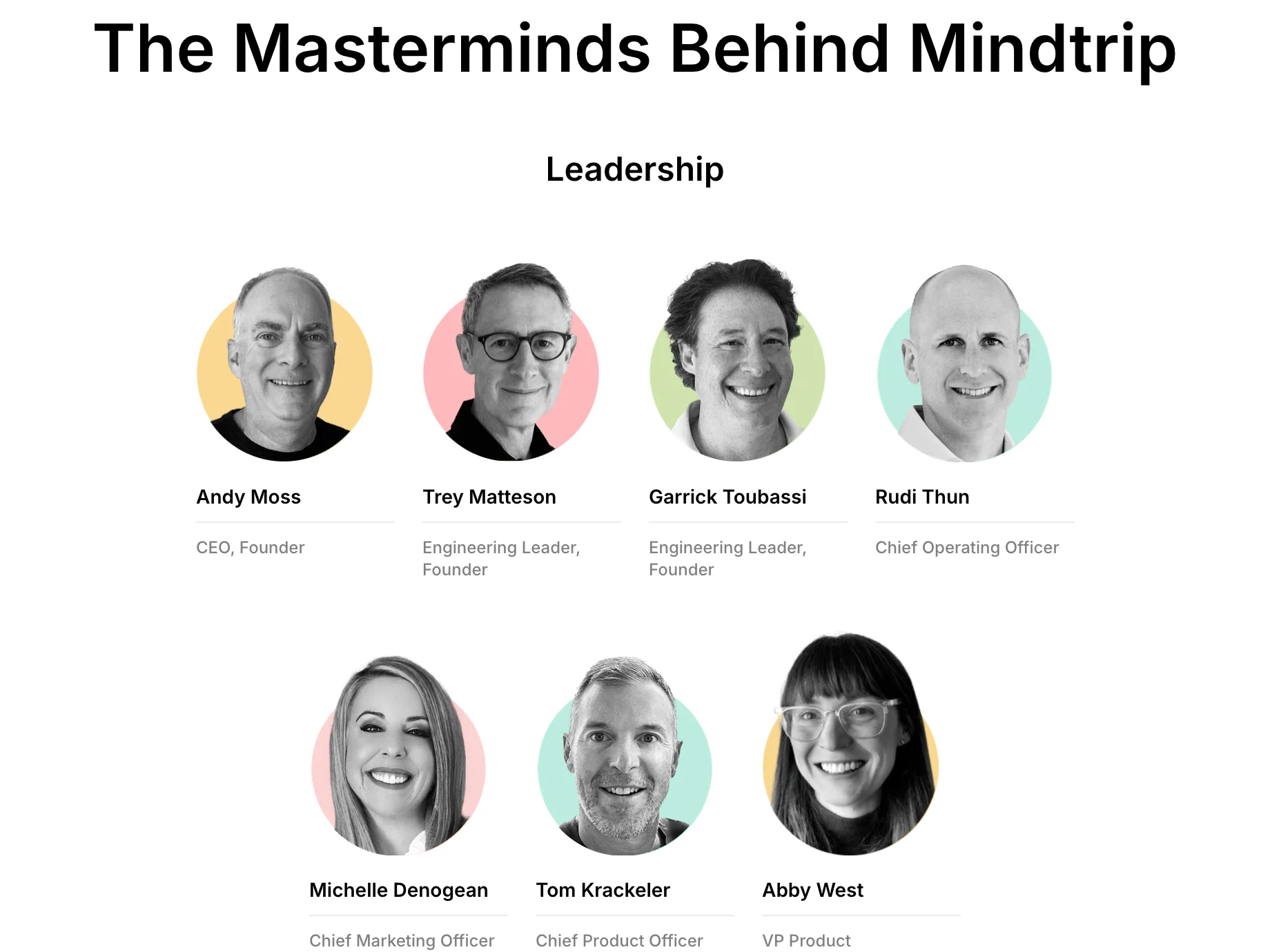
“Design and development from one person, delivered on time. Responsive, switched priorities quickly when needed, and the final experience finally matches the brand.”
 Andy MossFounder, Mindtrip
 Next caseEscapeClient projectImpact: About C$2,200 more revenue per 10,000 visits.Read the case
The spot next to Mindtrip is yours.
Tell me what it has to do. If it’s a fit, the price is fixed before any work starts.
Fixed price from €8k · 2 projects at a time